


Shortlist · Charging · 5 models
Best power banks you can take on a plane: five from 5,000 to 25,000 mAh, all under the FAA's 100 Wh line
A power bank is a lithium battery, and the FAA has rules: spares and power banks go in the cabin only, and anything over 100 watt-hours needs the airline's say-so. Five banks from a 3.5 oz plug-in to a 25,000 mAh laptop battery, every one under 100 Wh, compared on capacity, output, weight and ports from the makers — with the watt-hour figure stated or computed for each.
Quick answer
- 5000mAhA pocket, no cableAnker Nano 5K with USB-C connector (A1653) — 3.5 oz, plugs into the phone, about 18.5 Wh.
- 5000mAhAn iPhone, snapped on the backAnker Nano 5K MagGo Slim (A1665) — 0.34 inches thick, Qi2 15 W, about 18.5 Wh.
- 10,000mAhTwo charges, cable built inAnker Nano 10K (A1259) — 30 W out and in, 7.6 oz, about 37 Wh.
- 20,000mAhA weekend, two cables built inAnker Zolo 20K 45W (A1681C) — 74 Wh stated, 14.8 oz.
- 25,000mAhA laptop on a long-haul flightUGREEN Nexode 25K 145W — 90 Wh stated, 100 W to a laptop, about 2 h to refill.
The five at a glance
| Model | Capacity | Energy | Max output | Ports | Weight | Where to buy |
|---|---|---|---|---|---|---|
| Anker Nano Power Bank 5K with USB-C Connector (A1653)for a pocket, no cable | 5000 mAh | about 18.5 Wh (5,000 mAh at 3.7 V, computed)† | 22.5 W | Fold-out USB-C connector, 1 USB-C port | 3.5 oz | View listing |
| Anker Nano Power Bank 5K MagGo Slim (A1665)for an iPhone, snapped on the back | 5000 mAh | about 18.5 Wh (computed)† | No confirmed data | No confirmed data | 4.3 oz | View listing |
| Anker Nano Power Bank 10K with Built-In Cable (A1259)for two phone charges with the cable built in | 10,000 mAh | about 37 Wh (computed)† | 30 W | Built-in USB-C cable, 1 USB-C, 1 USB-A | 7.6 oz | View listing |
| Anker Zolo Power Bank 20K 45W (A1681C)for a weekend, two cables built in | 20,000 mAh | 74 Wh | 45 W | Two built-in USB-C cables, 1 USB-C, 1 USB-A | 14.8 oz | View listing |
| UGREEN Nexode Power Bank 25K 145Wfor a laptop on a long-haul flight | 25,000 mAh | 90 Wh | 145 total (PD 3.1) W | 2 USB-C, 1 USB-A | 19.4–21.5† | View listing |
Scroll sideways to see every column
† Figure from a retailer listing or otherwise awaiting confirmation from the manufacturer; other figures come from manufacturer manuals and spec sheets.
Watt-hours are the makers’ where stated (Anker Zolo 74 Wh, UGREEN 90 Wh) and computed from capacity at 3.7 V where not, which is why the Nano figures are marked pending. UGREEN’s weight is a range because its regional pages disagree, 550 g on one and 609 g on another. The FAA figures are from its PackSafe page as read on 2026-10-10.
The rule, in one paragraph
The FAA’s PackSafe guidance for lithium batteries: spare lithium-ion batteries and power banks are carry-on only, never in a checked bag; each is limited to 100 Wh; with the airline’s approval you may carry up to two spares between 101 and 160 Wh; and if a bag is gate-checked, the batteries come out of it. The TSA says the same on its own page. The practical consequence is that a power bank up to about 27,000 mAh at 3.7 V flies without asking, and the biggest one here, at 25,000 mAh and 90 Wh, is deliberately under that line.
The other half of the shortlist is the bank’s own numbers. Capacity in mAh sets how many charges you get; output in watts sets how fast; input sets how long it takes to refill; and weight sets whether it comes with you. The spread here is 3.5 oz to over a pound.
Anker Nano 5K with USB-C connector (A1653) — for a pocket, no cable
for a pocket, no cable
Anker Nano Power Bank 5K with USB-C Connector (A1653)
- Capacity
- 5000 mAh
- Energy
- about 18.5 Wh (5,000 mAh at 3.7 V, computed)†
- Max output
- 22.5 W
- Ports
- Fold-out USB-C connector, 1 USB-C port
- Weight
- 3.5 oz
Check price on Amazon
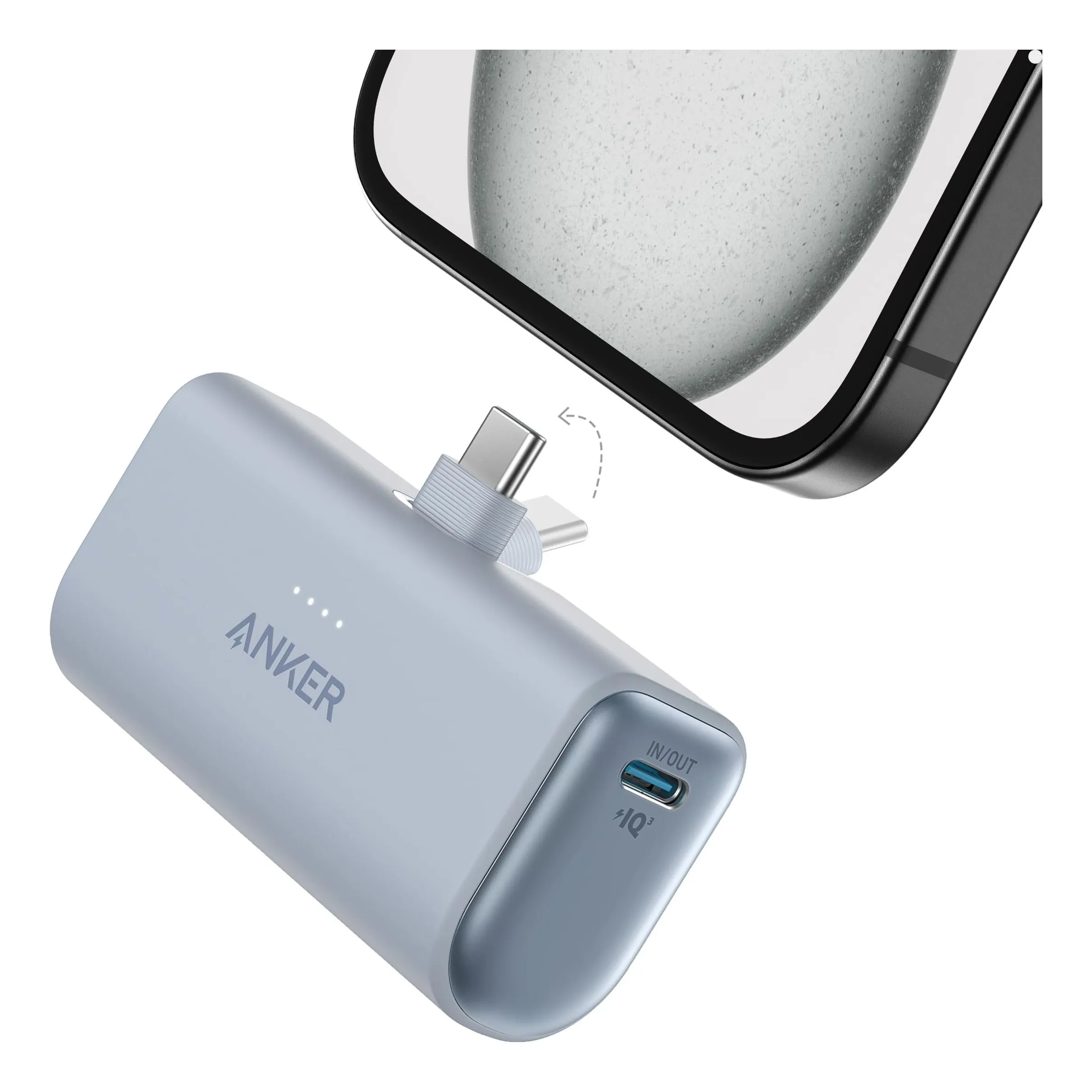
A 3.5 oz battery with a USB-C connector that folds out of the body and plugs straight into the bottom of the phone: 5,000 mAh, 22.5 W, one extra USB-C port, and it charges itself through the same connector, by Anker’s page. Anker does not state watt-hours; at 3.7 V it computes to about 18.5 Wh.
Five thousand milliamp-hours is one phone charge, it hangs off the phone’s port while it works, and 22.5 W is slow for a tablet.
For a night out, a long commute or a coat pocket, it is the one there is no excuse for leaving at home.
Strengths
- No cable: the connector folds out of the body
- 3.5 oz
- Charges itself from the same USB-C port
Limitations
- 5,000 mAh is roughly one phone charge
- Hangs off the phone's port while charging
- 22.5 W, so it is not fast on a tablet
Good for
- a night out or a long commute
- an iPhone 15 or later, or any USB-C Android
- a coat pocket
Look elsewhere if
- tablets and laptops
- a weekend away without an outlet
Anker Nano 5K MagGo Slim (A1665) — for an iPhone, snapped on the back
for an iPhone, snapped on the back
Anker Nano Power Bank 5K MagGo Slim (A1665)
- Capacity
- 5000 mAh
- Energy
- about 18.5 Wh (computed)†
- Weight
- 4.3 oz
Check price on Amazon
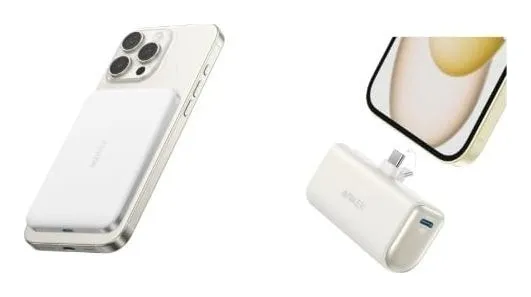
A third of an inch thick, 2.8 by 4 inches and 4.3 oz, it snaps magnetically to an iPhone 12 or later or a Qi2 Android and charges at up to 15 W with no cable, or by USB-C at up to 20 W; 5,000 mAh, which computes to about 18.5 Wh, from Anker’s page.
Wireless charging wastes some of that as heat, so it is one top-up rather than one full charge, and it needs a phone with magnets or a magnetic case.
For a day out with a dying iPhone, a purse or a jeans pocket, it is the one you forget is attached.
Strengths
- 0.34 in thick — the slimmest here
- Qi2 15 W magnetic charging, no cable
- Also charges by USB-C at 20 W
Limitations
- One charge, roughly
- Wireless charging wastes some of that capacity as heat
- Needs a MagSafe or Qi2 phone, or a magnetic case
Good for
- an iPhone 12 or later
- a day out with a dying battery
- a purse or a jeans pocket
Look elsewhere if
- phones without magnets
- anything bigger than a phone
Anker Nano 10K with built-in cable (A1259) — for two phone charges with the cable built in
for two phone charges with the cable built in
Anker Nano Power Bank 10K with Built-In Cable (A1259)
- Capacity
- 10,000 mAh
- Energy
- about 37 Wh (computed)†
- Max output
- 30 W
- Ports
- Built-in USB-C cable, 1 USB-C, 1 USB-A
- Weight
- 7.6 oz
Check price on Amazon
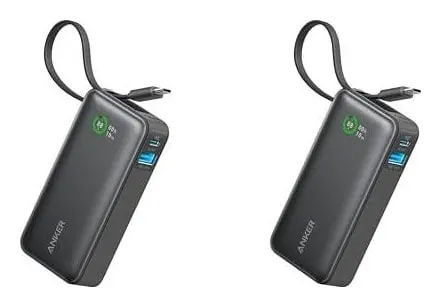
Ten thousand milliamp-hours — about two phone charges — with a USB-C cable built into the body, a spare USB-C and a USB-A, 30 W out and 30 W back in so it refills quickly, 2.1 by 4.1 by 1 inches and 7.6 oz, by Anker’s page; about 37 Wh computed.
It is an inch thick and half a pound, the built-in cable is short, and it is too big for a jeans pocket.
For a day of heavy phone use plus earbuds, a tablet top-up or a commuter bag, it is the one with nothing to forget.
Strengths
- Built-in cable — nothing to forget
- 30 W both ways, so it refills fast
- Three ways to connect
Limitations
- 7.6 oz and an inch thick
- The built-in cable is short
- Still well under the FAA limit, but too big for a jeans pocket
Good for
- a day of heavy phone use plus earbuds
- a tablet top-up
- a commuter bag
Look elsewhere if
- a laptop
- a pocket
Anker Zolo 20K 45W (A1681C) — for a weekend, two cables built in
for a weekend, two cables built in
Anker Zolo Power Bank 20K 45W (A1681C)
- Capacity
- 20,000 mAh
- Energy
- 74 Wh
- Max output
- 45 W
- Ports
- Two built-in USB-C cables, 1 USB-C, 1 USB-A
- Weight
- 14.8 oz
Check price on Amazon
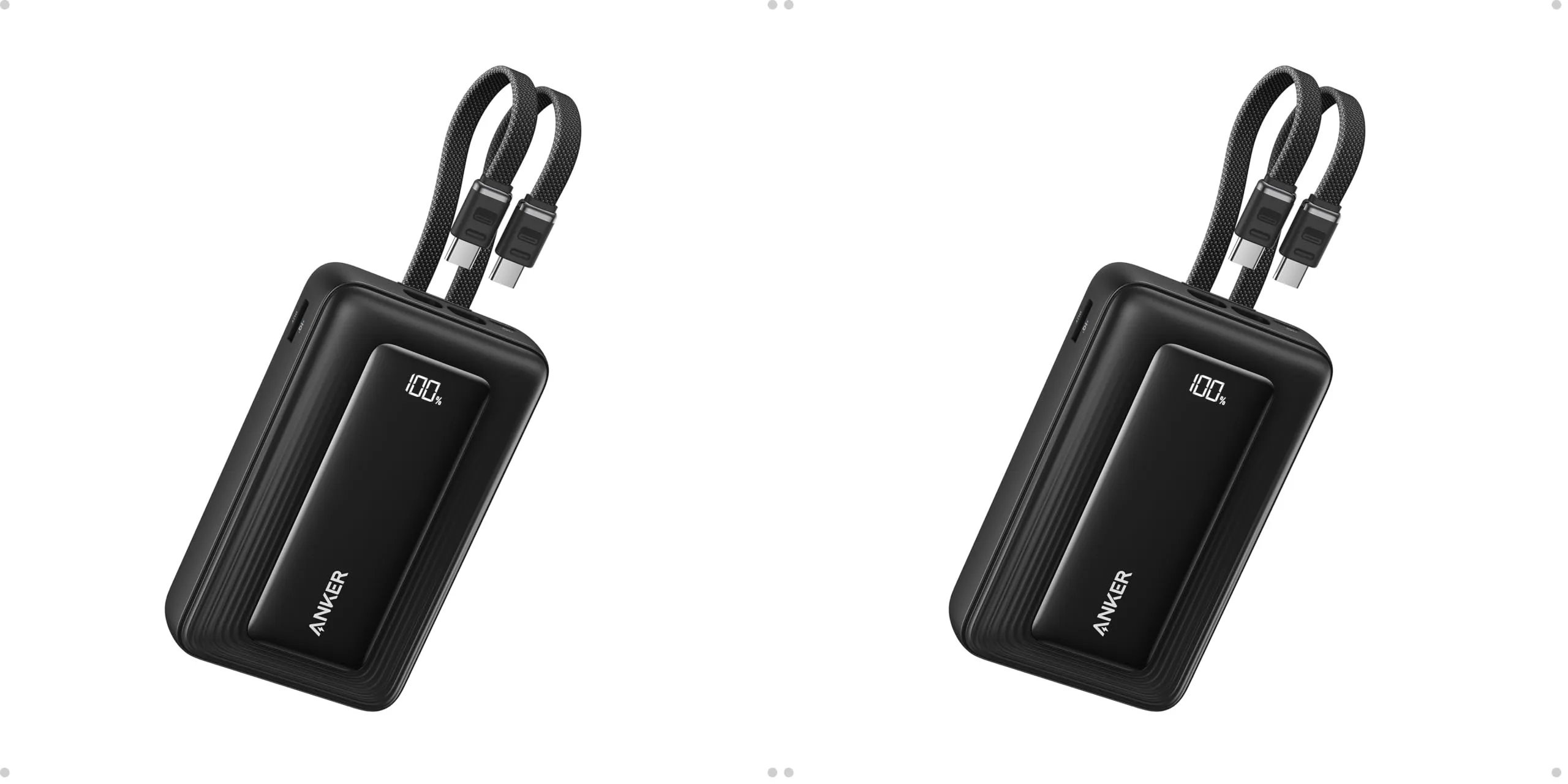
Twenty thousand milliamp-hours at 74 Wh, stated by Anker, so it flies without a question; two built-in USB-C cables plus a USB-C and a USB-A port, 45 W to one device, 15 W shared across two, 2.9 by 4.7 by 1.2 inches and 14.8 oz.
Nearly a pound in the bag, the shared 15 W is slow for two phones, and 45 W is marginal for a laptop.
For a weekend with no outlet, two people sharing one battery, or a tablet and a phone, it is the one.
Strengths
- 74 Wh stated by Anker — flies without asking
- Two built-in cables
- 45 W charges a phone at full speed
Limitations
- 14.8 oz — a pound in the bag
- Drops to a shared 15 W with two devices
- 45 W is marginal for a laptop
Good for
- a weekend with no outlet
- two people sharing one battery
- a tablet and a phone
Look elsewhere if
- a laptop that needs 65 W
- a pocket
UGREEN Nexode 25K 145W — for a laptop on a long-haul flight
for a laptop on a long-haul flight
UGREEN Nexode Power Bank 25K 145W
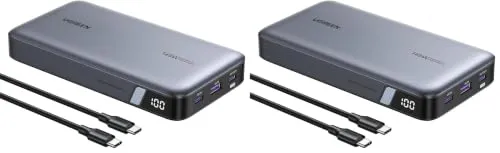
- Capacity
- 25,000 mAh
- Energy
- 90 Wh
- Max output
- 145 total (PD 3.1) W
- Ports
- 2 USB-C, 1 USB-A
- Weight
- 19.4–21.5†
Check price on Amazon
Twenty-five thousand milliamp-hours at 90 Wh, stated by UGREEN — ten under the FAA line — with 145 W across two USB-C ports and a USB-A, PD 3.1 so a laptop gets 100 W while a phone charges, a digital percentage display and a refill of about two hours from a 65 W charger.
It weighs over a pound — UGREEN’s own pages give 550 g and 609 g, so we mark the weight pending — and it needs its own pocket; for a phone-only user it is pointless.
For a laptop on a long-haul flight, a photographer’s bag or a power cut, it is the biggest battery that boards without a form.
Strengths
- 90 Wh, stated by UGREEN: no airline approval needed
- 100 W to a laptop plus a phone at once
- Recharges in about 2 h
Limitations
- Over a pound — UGREEN's own pages disagree on exactly how much
- Big enough to need its own pocket
- Pointless for a phone-only user
Good for
- a laptop on a long-haul flight
- a photographer or anyone with gear
- a power cut
Look elsewhere if
- a commute
- anyone who only charges a phone
How to choose
- Watt-hours first. Under 100 Wh flies without approval. All five are; the UGREEN at 90 is the closest to the line.
- Charges. 5K: one phone. 10K: two. 20K: three or four, or a tablet. 25K: a laptop.
- Output. 15–22.5 W (5K banks) for a phone; 30 W (10K); 45 W (Zolo) for a tablet or a slow laptop; 100 W (UGREEN) for a real laptop.
- Cables. Built in on the Nano 10K and Zolo; a plug-in connector on the 5K; magnets on the Slim; bring your own for the UGREEN.
- Weight. 3.5 oz to over a pound. Carry what you will actually carry.
What stays in the checked bag
Nothing with a lithium battery. Power banks, spare laptop batteries and camera batteries all go in the cabin, by the FAA; a bank in a checked suitcase is pulled at the belt or, worse, not. Devices with batteries installed may be checked but should be switched off; the FAA asks that they be protected from damage and accidental activation.
Which one, by situation
- Pocket, one charge: Anker Nano 5K connector.
- iPhone, no cable at all: Anker Nano 5K MagGo Slim.
- Commute, two charges: Anker Nano 10K.
- Weekend, two people: Anker Zolo 20K.
- Laptop, long flight: UGREEN Nexode 25K.
Sources
Facts checked October 10, 2026
- FAA PackSafe — Lithium batteries — Standard or regulation, checked October 10, 2026
- TSA — Lithium batteries with more than 100 watt hours — Standard or regulation, checked October 10, 2026
- Anker — Nano Power Bank (22.5W, Built-In USB-C Connector) product page — Manufacturer documentation, checked October 10, 2026
- Amazon listing (Anker) — Retailer listing, checked October 10, 2026
- Anker — Nano Power Bank (5K, MagGo, Slim) product page — Manufacturer documentation, checked October 10, 2026
- Amazon listing (Anker) — Retailer listing, checked October 10, 2026
- Anker — Nano Power Bank (30W, Built-In USB-C Cable) product page — Manufacturer documentation, checked October 10, 2026
- Amazon listing (Anker) — Retailer listing, checked October 10, 2026
- Anker — Zolo Power Bank (20K, 45W, Built-In Dual USB-C Cables) user guide A1681C — Product manual, checked October 10, 2026
- Amazon listing (Anker) — Retailer listing, checked October 10, 2026
- UGREEN — Nexode Power Bank 25000mAh 145W product page — Manufacturer documentation, checked October 10, 2026
- Amazon listing (UGREEN) — Retailer listing, checked October 10, 2026
What is the FAA rule for power banks?
The FAA's PackSafe page says spare lithium-ion batteries, including power banks, must be in carry-on baggage, not checked, and are limited to 100 watt-hours each; with airline approval you may carry up to two spares of 101 to 160 Wh. If a bag is gate-checked, the power bank comes out. The TSA's page says the same. Every bank here is under 100 Wh.
How do I find the watt-hours?
It is printed on the bank, or you compute it: milliamp-hours divided by 1,000, times 3.7 volts. Anker states 74 Wh for the Zolo 20K and UGREEN 90 Wh for the Nexode 25K; Anker does not print Wh for the three Nano banks, so our figures for them are computed — about 18.5 Wh for the 5K banks and 37 Wh for the 10K — and marked as such.
How many phone charges is 10,000 mAh?
About two for a typical phone, allowing for conversion loss; 5,000 mAh is one, and 20,000 is three or four or one tablet plus a phone. Wireless charging through a MagGo bank loses more to heat than a cable does, so the 5K Slim is closer to one top-up than one full charge.
Can a power bank charge a laptop?
Only if its output is 60 W or more and it has enough capacity to matter. The UGREEN 25K gives 100 W to a laptop and 90 Wh of capacity, which is roughly one full charge of a 13-inch laptop. The Anker Zolo at 45 W keeps a MacBook Air going slowly. The Nano banks are phone batteries.
Related reading
Shortlist · Charging
Best compact USB-C chargers: six from 30 to 140 watts, by what each port actually gets
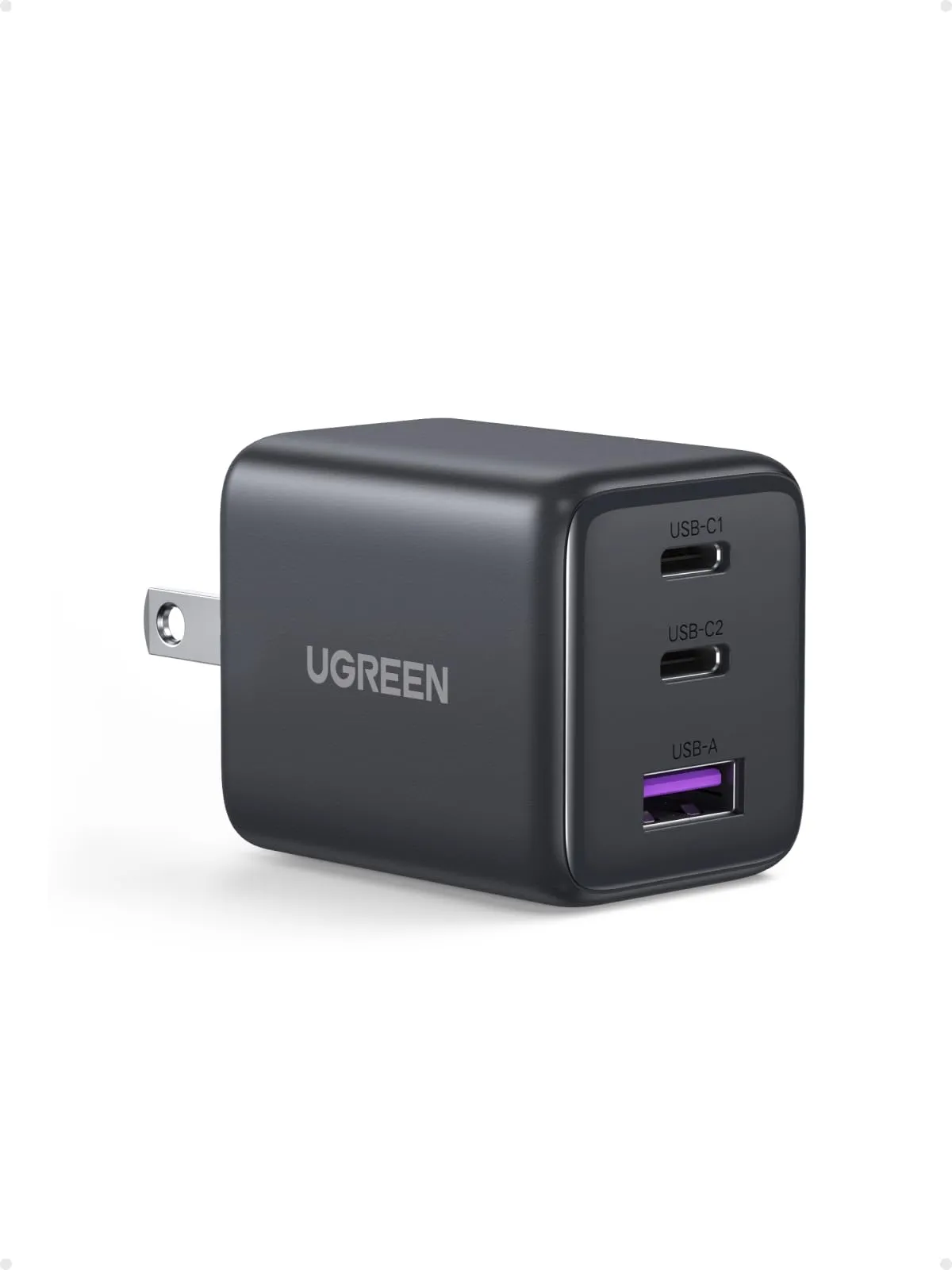
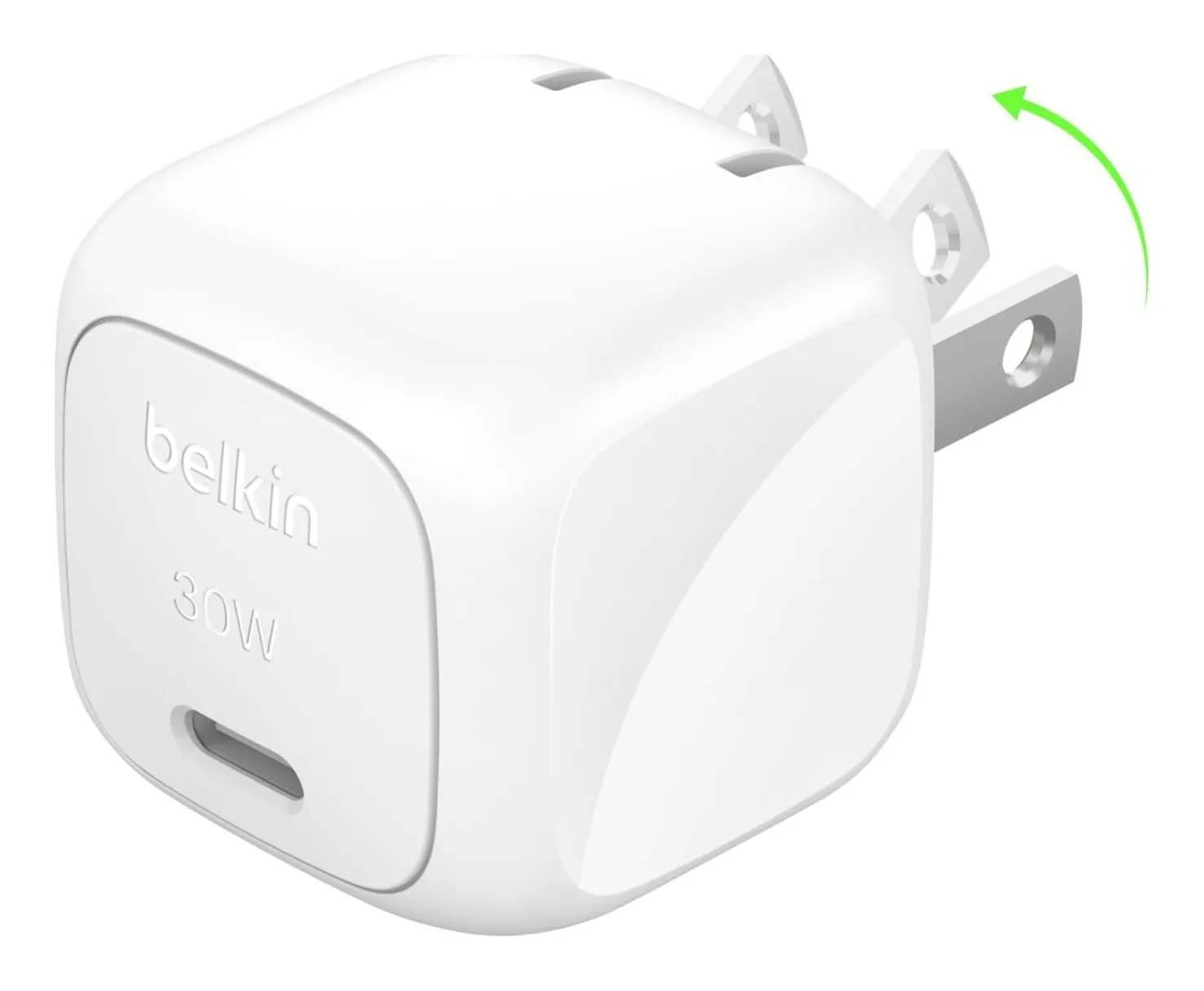
The watt figure on a charger is what one port gets when nothing else is plugged in. Plug in a second device and some chargers drop to 15 W shared, some publish a split, and some leave you to find out. Six compact GaN chargers from UGREEN, Belkin and Anker, 30 to 140 W, compared on total output, the published split, ports, size and weight from the makers.
Guide · Charging
Watts, PD, PPS and cables: how to read a USB-C charger before you buy one
A USB-C charger's box says 65 W and the phone charges at 18. The reasons are all on the spec sheet if you know which lines to read: the voltage profiles, the PPS range, what the ports share, and whether the cable can carry it. This guide explains each in plain terms, with four chargers and a power bank as worked examples from the makers' own figures.